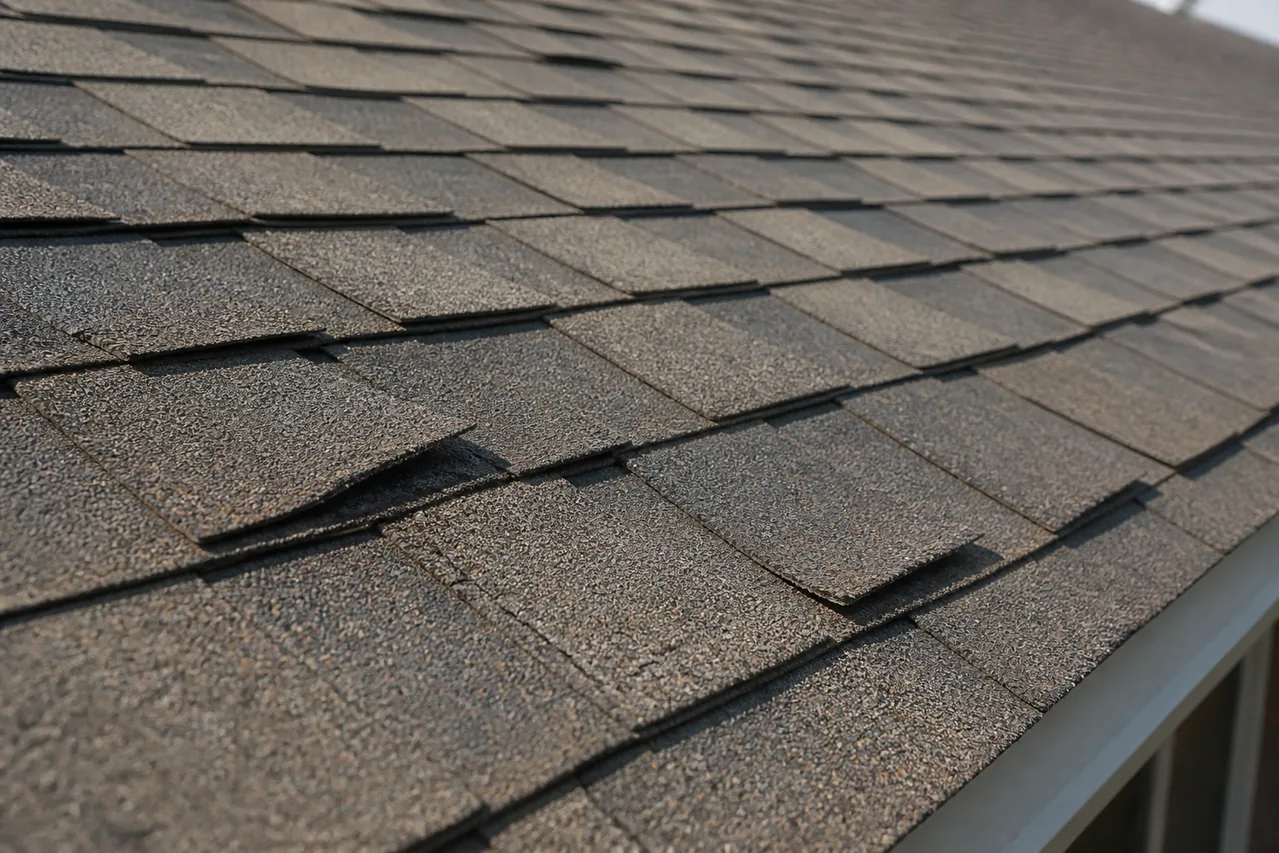
Not all edge movement is the same
Curling, cupping, lifting, and cracking describe different visible conditions. Their cause and significance may relate to aging, exposure, installation, ventilation, moisture, product behavior, or damage.
Distribution is important
A localized defect near a penetration may point toward repair, while widespread change across roof planes may suggest that responsible preservation is less likely. Wind-facing edges and high-exposure areas can show different patterns.
Check related indicators
Leak history, missing shingles, soft or irregular decking, flashing condition, granule change, and prior repairs help place the surface symptom in context.
Avoid unsafe inspection
Brittle or lifted roofing can be vulnerable to foot traffic. Use ground-level photos and professional assessment rather than walking the roof yourself.
Describe the shape and location accurately
Homeowners often use curling as a general term, but raised corners, cupped edges, lifted tabs, surface fissures, split shingles, and displaced material can represent different conditions. Record whether the change is isolated or repeated, whether it follows a roof edge or penetration, and whether it appeared after wind or temperature extremes. Also note nearby repairs, interior moisture signs, and changes in the roof line. Clear descriptions help a professional decide which details need close inspection. They do not establish cause, severity, or treatment eligibility without the rest of the roof evidence.
Why preservation has a firm boundary here
A field-applied preservation treatment should not be used to conceal loose, broken, missing, or failed roofing. Localized repair may be possible when the cause and surrounding materials support it. Widespread deformation, repeated cracking, failed sealing, uncertain attachment, or related decking and moisture concerns may point toward a different route. Even when repair is practical, the remaining roof still needs separate evaluation before rejuvenation is considered. Ask who is responsible for the repair, how repaired areas affect any proposed treatment, and what observable conditions would stop the project.
Decision takeaway
Cracking or edge movement should lead to a closer condition review before any product decision. The assessor should distinguish isolated repairable damage from a broad pattern and should identify safety, attachment, moisture, decking, or compatibility concerns that change the route. Avoid foot traffic and quick cosmetic fixes. If treatment remains under consideration, require a clear explanation of what will be repaired first, what cannot be corrected, and what condition would stop the work.