Begin with what you know
Share roof type, approximate age, visible concerns, leaks, storm history, prior repairs, timing, and safe ground-level photographs. “Not sure” is better than guessing.
Inspect the condition
The review considers shingle condition, granules, cracking or curling, missing materials, flashing, penetrations, leakage signs, visible decking or structural concerns, and manufacturer information when identifiable.
Diagnose responsible options
The reviewer distinguishes preservation potential from repair needs, compatibility questions, safety risks, and conditions requiring specialist or replacement evaluation.
Route the next step
The result may be rejuvenation evaluation, repair first, maintenance or monitoring, specialist evaluation, restoration, or replacement. On-site assessment is the authority for a specific roof.
What happens before and during the visit
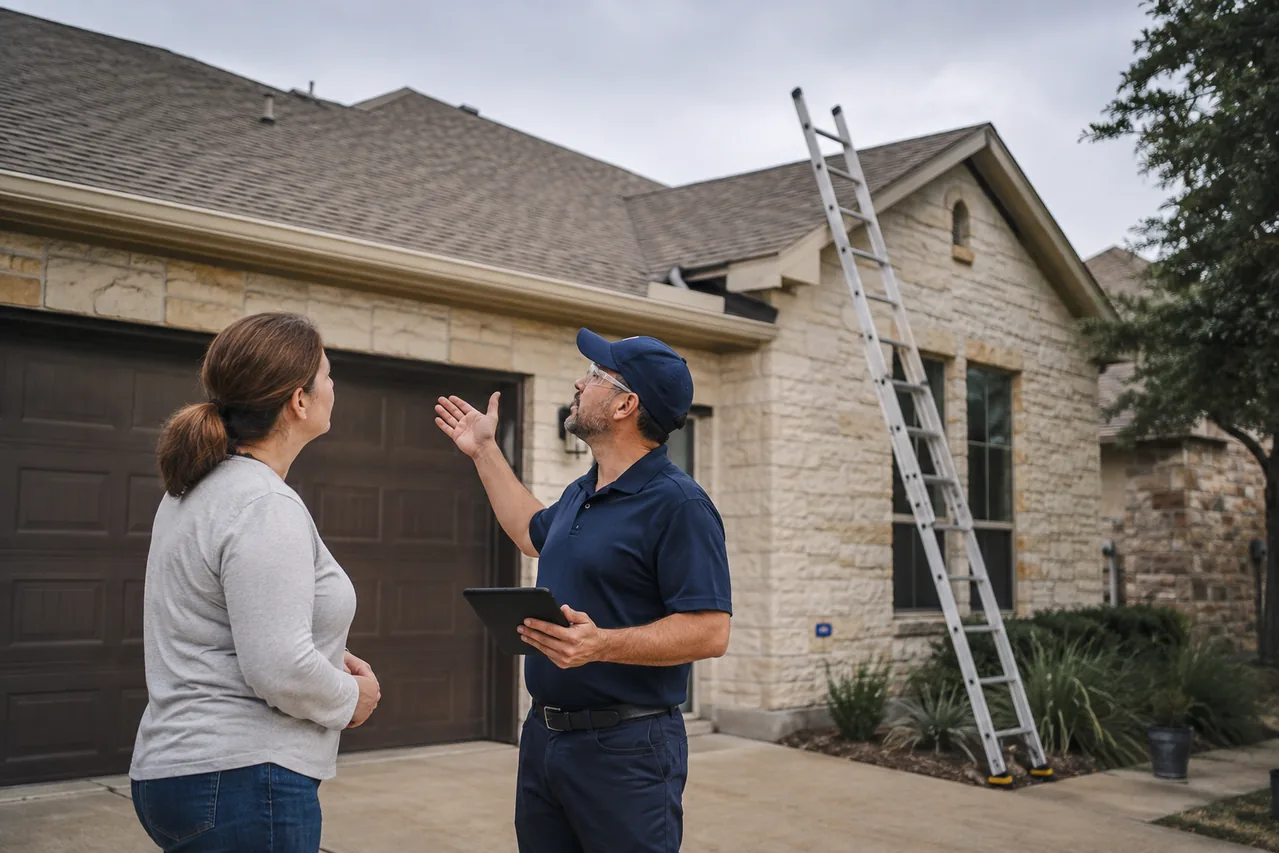
Before scheduling, the intake helps confirm the roof type, location, reported concerns, safe access, and whether the request belongs in the active asphalt-shingle pathway or needs manual review. During an on-site assessment, the professional should connect visible conditions to specific roof planes and details, review relevant interior or history information, and note what is inaccessible or uncertain. Photographs should support the record rather than function as a remote verdict. If urgent leakage or safety issues are present, those concerns take priority over preservation evaluation.
What a useful assessment result contains
The result should summarize observed facts, important unknowns, repair or specialist needs, and the recommended route. If rejuvenation remains worth considering, it should state the prerequisites and compatibility questions still to resolve. If the route is monitoring, give a practical trigger or review point without guaranteeing future condition. If replacement or repair is indicated, explain the boundary that led there. Homeowners should leave with a next step they can understand, not merely a product pitch. Online qualification remains preliminary; the professional assessment is the roof-specific authority.
Decision takeaway
A good assessment converts scattered observations into a documented decision path. It should tell you what was seen, what remains unknown, what needs attention first, and why the next route fits. It should not turn preliminary web answers into a conclusive diagnosis. Bring useful history, ask for clear boundaries, and retain the record. Service availability, commercial terms, treatment compatibility, and any warranty must still be confirmed through their appropriate documented processes.