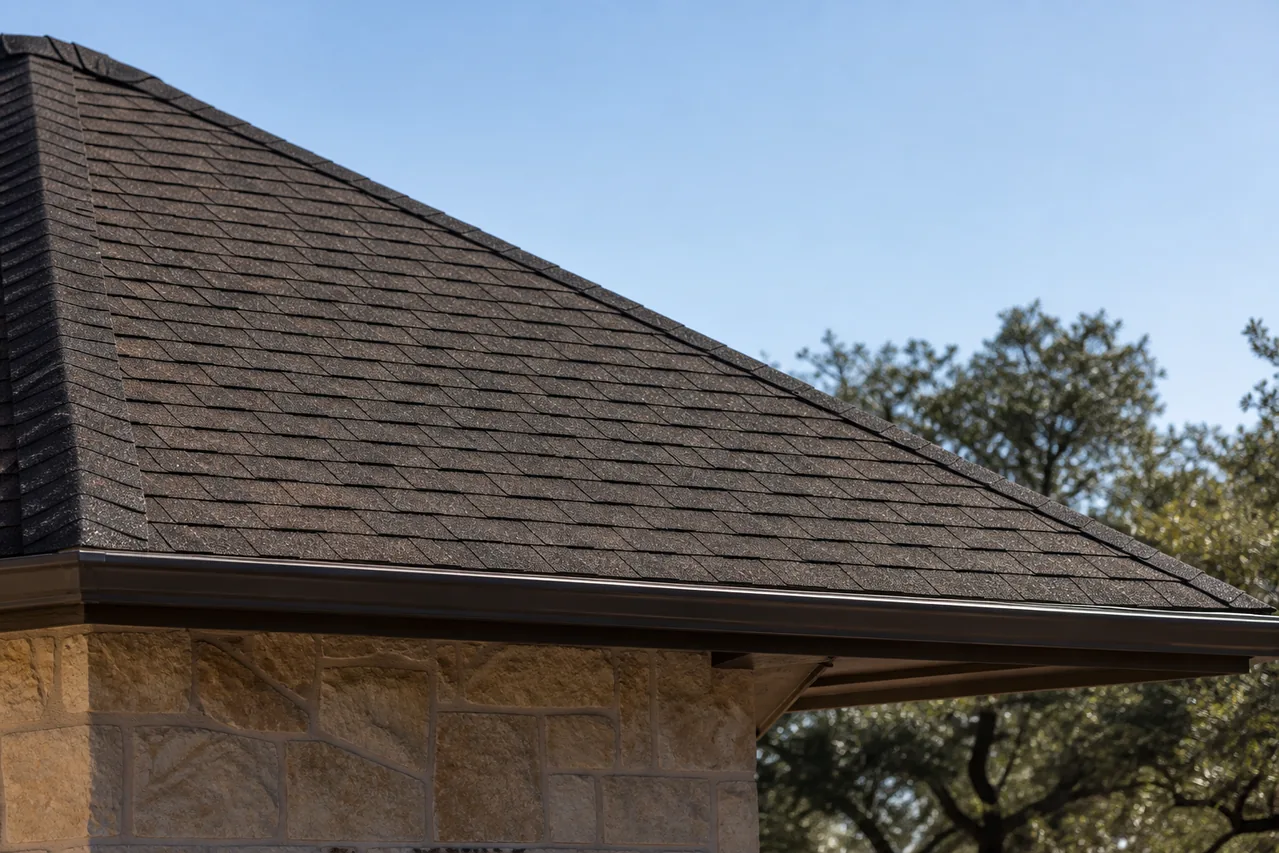
A roof ages as a system
Asphalt shingles are one part of a roof assembly. Installation, ventilation, underlayment, flashing, drainage, slope, penetrations, exposure, and maintenance history can influence how the roof performs and what aging looks like.
Texas exposure can vary
Texas roofs can be exposed to prolonged sun, heat, thermal cycling, wind, severe thunderstorms, hail, and rainfall or moisture events. Not every roof experiences the same combination or intensity, and different roof planes may age differently.
What homeowners may notice
Visible observations can include surface granule change, color variation, cracking, curling, lifting, missing shingles, repeated repairs, or interior staining. None of these observations alone provides a complete diagnosis.
Document change safely
Use dated ground-level photos, retain installation and warranty documents, and record repair or storm history. Do not walk on steep, wet, brittle, or damaged roofing. A professional assessment can place observations in context.
Why different roof planes can look different
A south- or west-facing plane may receive different sun exposure than a shaded plane, while wind direction, nearby trees, roof geometry, drainage, and adjacent walls can create other patterns. Valleys handle concentrated water flow. Ridges, edges, penetrations, and transitions have different fastening and flashing details. Ventilation and attic conditions can also influence how the assembly behaves. Because these variables interact, uneven appearance does not automatically prove a single cause. A professional should compare the locations, severity, and distribution of change with the roof history instead of extrapolating from the most visible spot.
Build an aging timeline instead of guessing
Start with the best available installation date and product documents, then add dated ground-level photos taken from consistent viewpoints. Record maintenance, repairs, interior stains, nearby construction, tree impacts, and significant weather events. Note whether a condition appeared suddenly or changed gradually. Clean gutters and manage surrounding vegetation only through appropriate safe services; do not damage shingles while trying to inspect them. A timeline helps distinguish a stable observation from an accelerating problem and gives a roof professional better context for deciding whether monitoring, repair, preservation review, specialist evaluation, or replacement planning is responsible.
Decision takeaway
Visible age is useful evidence, but it should be interpreted with the whole assembly and its timeline. Two roofs installed in the same year can have different exposure, installation, ventilation, repair, and storm histories. Focus on change, distribution, related moisture or structural indicators, and documented events. When a pattern is new, widespread, or accompanied by leakage, request an appropriate assessment. The outcome may be maintenance, repair, preservation review, specialist input, or replacement planning.