Gather the roof record
Bring installation documents, known manufacturer or product information, warranty papers, repair invoices, inspection reports, and dates of major storm events when available.
Describe what changed
Note leaks, ceiling stains, missing shingles, lifting, cracking, granules, debris, or recent repair needs. Include when and under what weather conditions you noticed them.
Take photos safely
Ground-level and interior photographs can support initial review. Do not climb a ladder or walk on a steep, wet, brittle, hot, or damaged roof to create documentation.
Prepare your questions
Ask what was observed, what remains uncertain, whether repair comes first, what options are responsible, what compatibility information matters, and how the next step will be confirmed.
Make the visit efficient without taking risks
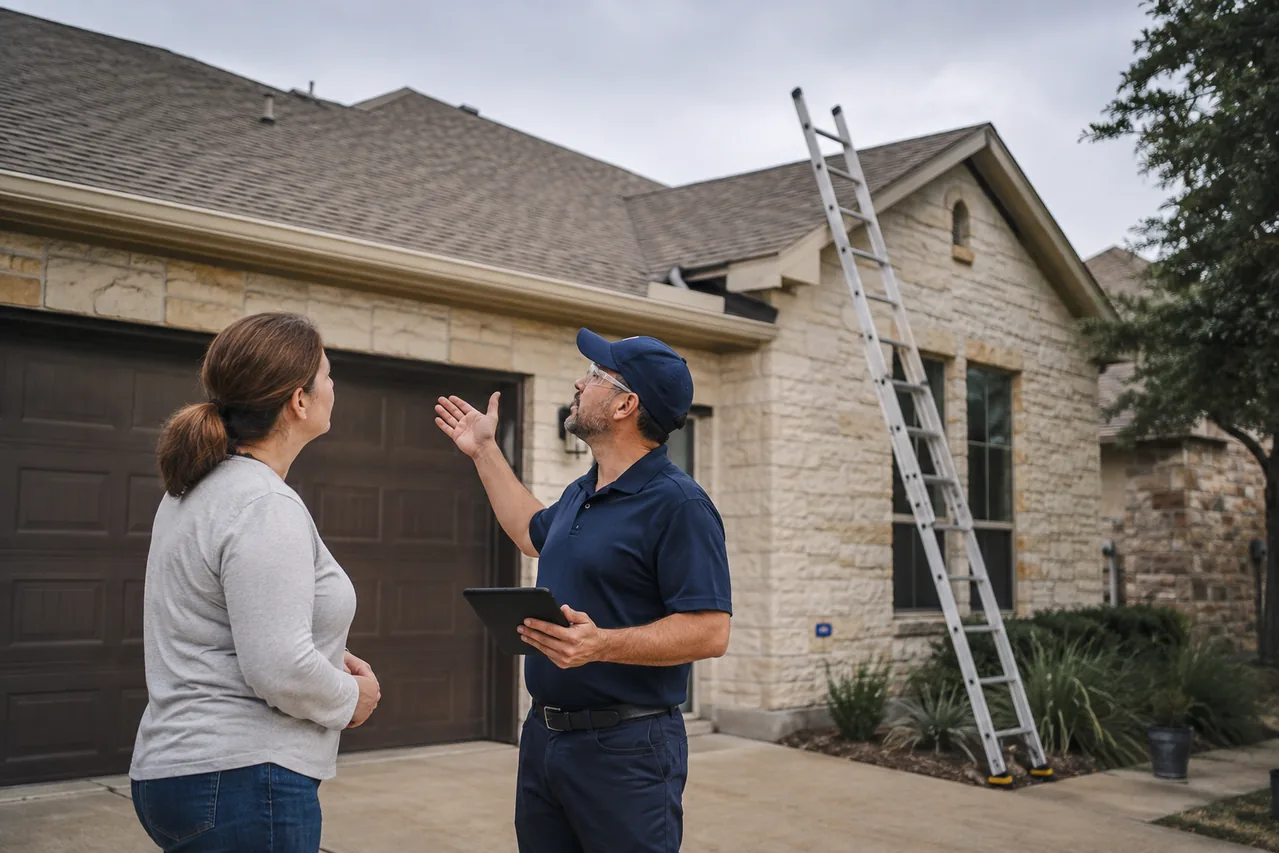
Clear ordinary access to gates, attic hatches, electrical panels, or interior stain locations only when it is safe and appropriate. Secure pets and tell the assessor about fragile landscaping, locked areas, solar equipment, known hazards, or recent repairs. Gather documents in one place and make a short timeline of leaks, storms, and observed changes. Ground-level photographs are helpful but optional. Do not climb, move roofing, enter a hot or unsafe attic, or delay urgent leak response simply to collect more information for the appointment.
Leave with clear next steps
Ask the assessor to distinguish observations, likely concerns, unknowns, and recommended follow-up. Confirm whether repair, monitoring, manufacturer research, specialist evaluation, preservation review, or replacement planning comes next, and whether Texas Roof Life performs that step. If photos or documents will be delivered later, identify how they affect the recommendation. Request written scope and product information before authorizing treatment. Make sure service availability, timing, price, and warranty are confirmed by an authorized person rather than inferred from the preliminary web journey.
Decision takeaway
Preparation should improve information without creating a safety risk. Bring documents and a concise timeline, make ordinary access practical, and list the questions that matter to your decision. Let the professional handle roof access and condition interpretation. Before the conversation ends, confirm the observed facts, unknowns, urgent items, responsible route, next owner, and documentation you will receive. The assessment—not the website—determines whether rejuvenation deserves further consideration.