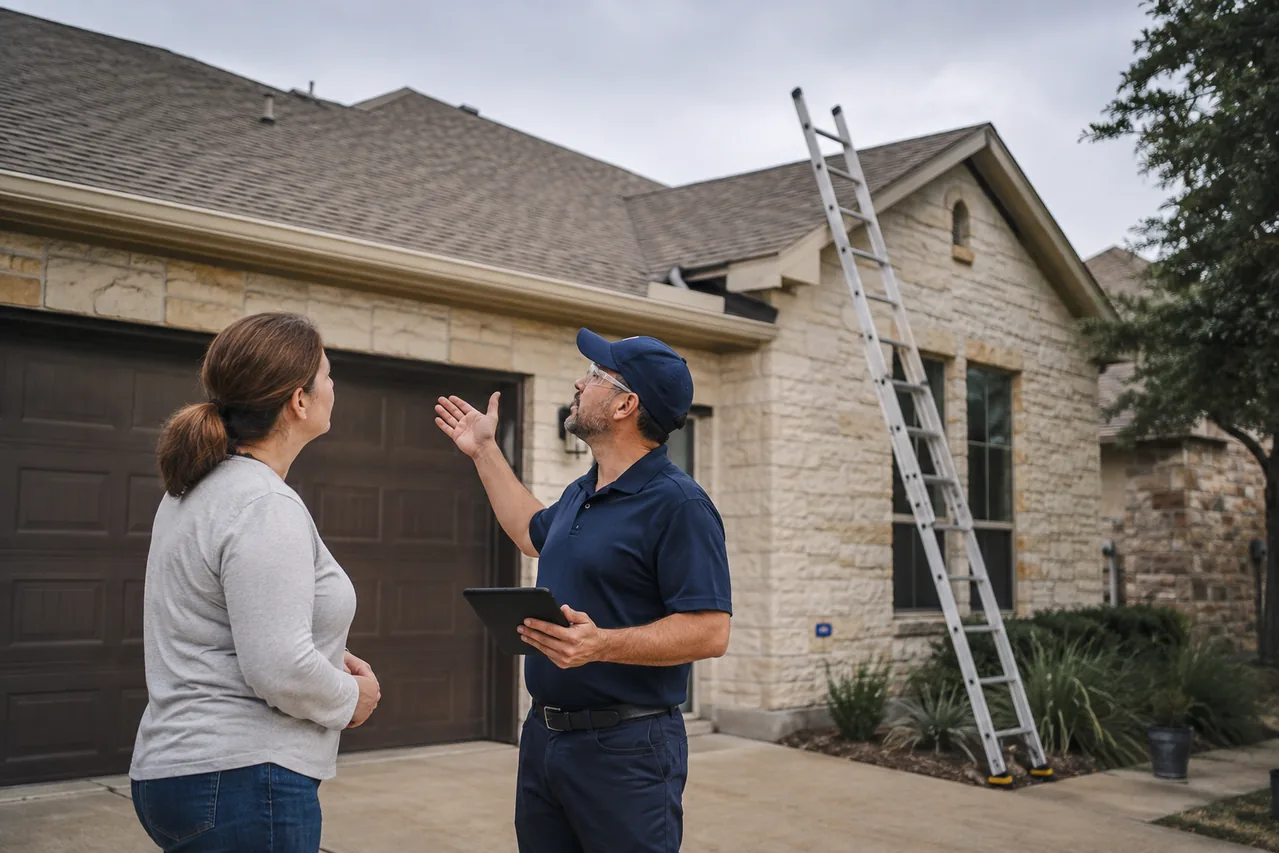
Create a baseline
Record roof type, known age, installation and warranty documents, penetrations, drainage, repairs, leak history, and dated ground-level photographs.
Watch for material changes
New missing shingles, visible lifting, interior stains, granule concentration, debris impacts, or effects after severe weather should prompt an appropriate review.
Keep interventions traceable
Save repair scopes, product details, photographs, invoices, and inspection notes. This helps future professionals distinguish old conditions from new changes.
Plan the next decision point
An assessment may recommend monitoring, maintenance, repair, preservation evaluation, or replacement planning. A review schedule creates a responsible time to look again; it does not guarantee service life.
Use condition-based triggers, not a generic promise
A practical plan identifies who will review the roof, which accessible conditions will be recorded, and what events trigger an earlier inspection. Triggers may include new leakage, missing or lifted materials, falling debris, a significant storm, work by another trade near penetrations, or a visible change from prior photographs. The plan should reflect roof type, geometry, surrounding trees, drainage, prior repairs, and building use. It should not imply that routine observation prevents every failure or that a fixed schedule guarantees the remaining service life.
Create a record another professional can use
Organize installation and warranty documents, roof diagrams or location notes, dated photographs, inspection reports, repair scopes, invoices, product information, and interior moisture history. Label records by roof plane or feature when possible. When work is performed, record what was opened, replaced, sealed, or treated and what remained unchanged. A clear handoff helps future professionals distinguish repeated problems from new ones and reduces dependence on memory. Texas Roof Life currently presents maintenance as planning and assessment guidance, not as an active recurring subscription promise.
Decision takeaway
Maintenance planning is valuable when it produces a consistent record and clear action triggers. It should help a future professional understand the roof, not create a false promise that inspection prevents every problem. Review sooner after material changes or severe events, and keep repair and product details traceable. Texas Roof Life can discuss the current condition and next review decision, but this release does not advertise an active recurring maintenance subscription or guarantee a service-life outcome.