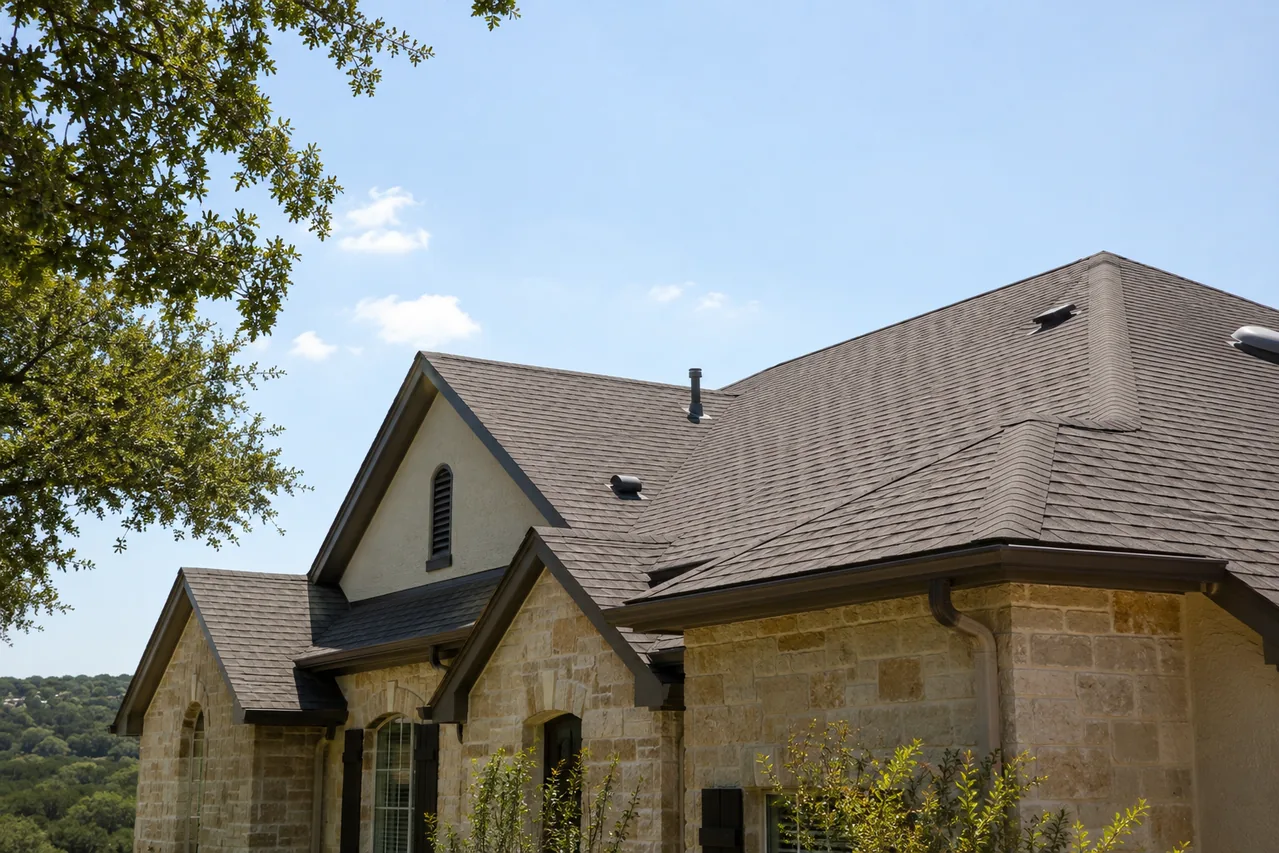
Look for patterns
Aging often appears as a pattern rather than one isolated defect. Surface change, cracking, edge movement, granule accumulation, or repeated maintenance needs deserve context from roof age, product, exposure, and history.
Separate aging from damage
Missing shingles, punctures, bent flashing, impact marks, or a sudden leak after severe weather may require storm or repair evaluation. Normal aging and event-related damage can overlap, so a photo should not be treated as a final determination.
Interior clues matter
Ceiling stains, damp insulation, odors, or visible decking change can signal moisture entry. Significant active leakage or structural change needs prompt attention rather than a preservation conversation.
Assessment routes the condition
The outcome may be monitoring, repair, rejuvenation evaluation, specialist review, or replacement. Age is one input; it does not decide qualification by itself.
A safe homeowner observation checklist
From the ground or a safe interior location, note whether roof lines remain visually even, whether shingles appear missing or displaced, and whether edges, ridges, valleys, or penetrations show an obvious change. Look for concentrated granules near drainage outlets, debris after wind, and changes that affect only one plane. Indoors, record the location and date of stains, dampness, peeling finishes, or musty odors without entering unsafe attic areas. Photograph context as well as close details when that can be done safely. Do not lift shingles, probe soft areas, or walk the roof to make the checklist more complete.
When observation should become prompt action
Active water entry, sagging surfaces, fallen material, an opening after a storm, electrical exposure, or a rapidly changing interior stain deserves prompt professional attention. Those are not conditions to postpone while comparing preservation products. Less urgent surface changes still deserve evaluation when they are widespread, recur after repair, or appear alongside leakage or structural indicators. The goal is not to label every mark as failure. It is to identify changes early enough that the appropriate person can determine whether the roof needs repair, monitoring, a preservation assessment, a specialist, or replacement planning.
Decision takeaway
Use signs of aging to decide what should be inspected, not to self-diagnose the roof. A single symptom can have several explanations, while multiple related observations may make prompt review more important. Share dates, locations, safe photographs, and history, and be explicit about uncertainty. A responsible professional should explain how the pattern affects the route and why any repair, monitoring, rejuvenation evaluation, specialist review, or replacement recommendation fits the evidence.