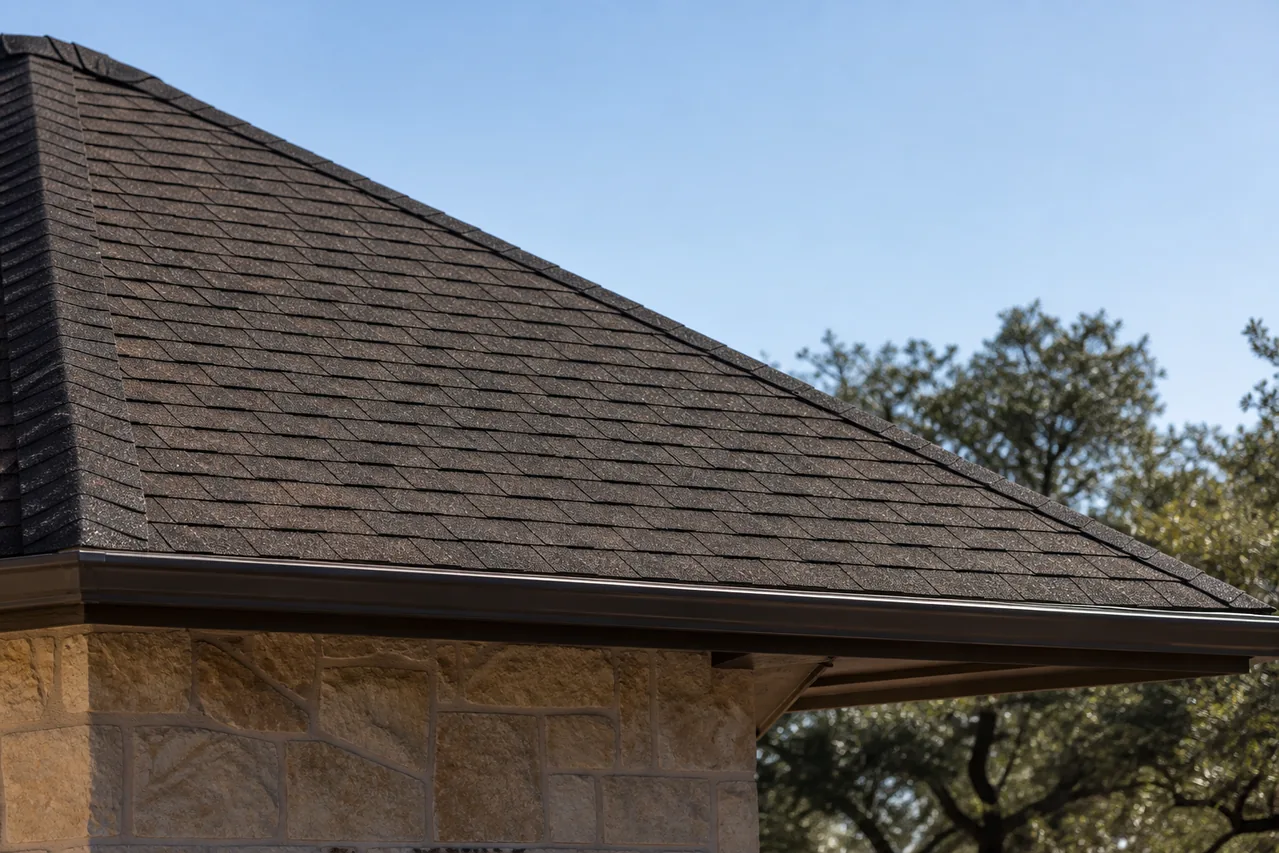
Start with the roof, not the treatment
Roof rejuvenation is a field-applied preservation treatment considered for some aging asphalt-shingle roofs. It is not an automatic answer based on roof age, color, or a photograph. A responsible evaluation first asks whether the roof remains substantially intact and whether repair, structural, leak, or compatibility concerns change the route.
What it may address
When a roof is suitable, rejuvenation may be evaluated within a roof-life plan for aging or weathered asphalt shingles. The assessment considers shingle surface, granule condition, cracking or curling, missing materials, flashing, penetrations, leak and storm history, decking indicators, and identifiable roof-system information.
What it cannot fix
A treatment cannot replace rotten decking, reconstruct failed flashing, stop every leak, replace widespread missing shingles, correct structural movement, or make a roof beyond responsible preservation suitable again. Those conditions require an appropriate repair, specialist, or replacement path.
The responsible next step
Share what you know, including uncertainty and safe ground-level photos. Texas Roof Life uses Inspect → Diagnose → Route to gather the condition, evaluate the responsible options, and confirm the next step through professional assessment.
Questions a real assessment should answer
A useful assessment should identify the roof covering, describe the visible pattern rather than one isolated photograph, and separate correctable defects from broader aging. Ask whether flashing, penetrations, valleys, transitions, repairs, drainage, and accessible decking indicators were considered. Ask what information is still unknown and whether an on-site view is needed before a recommendation. If the shingle product or manufacturer can be identified, ask how compatibility and any applicable warranty terms will be checked. The answer should connect the proposed preservation step to observed conditions without promising a fixed number of added years or treating age as automatic eligibility.
What responsible documentation looks like
Keep the dated assessment, representative photographs, repair recommendations, product name and instructions, preparation requirements, application scope, exclusions, and follow-up guidance together. The record should distinguish facts observed on the roof from assumptions and marketing descriptions. If repairs are required first, document who will confirm that they are complete and whether the roof must be reassessed. After any work, retain the invoice and application record so a future inspector can understand what changed. Good documentation does not guarantee an outcome, but it makes maintenance, warranty questions, later storm review, and replacement planning more informed.
Decision takeaway
Treat rejuvenation as one possible tool inside a roof-life decision, not as the diagnosis. The useful sequence is to document the roof, correct or route material defects, verify the roof system and relevant product information, and then decide whether preservation remains responsible. If those steps do not support treatment, repair, monitoring, specialist evaluation, or replacement is the better result. Start with the preliminary journey only to organize information; a person must confirm suitability and service availability.