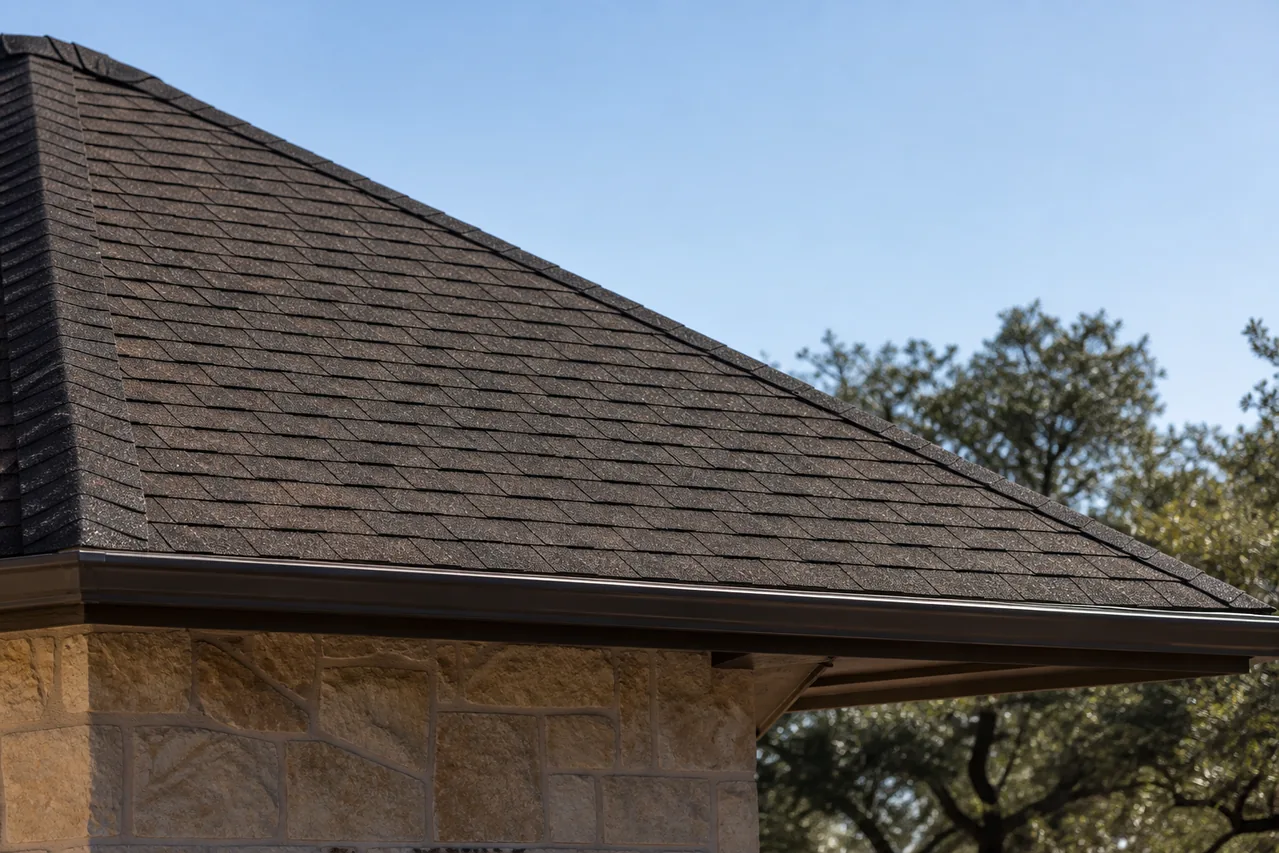
Major defects set the boundary
Structural concerns, rotten or extensively damaged decking, widespread missing or failed shingles, significant active leakage, and condition beyond responsible preservation cannot be corrected by a surface treatment.
The roof system may be unsuitable
The active Texas Roof Life pathway concerns qualifying asphalt-shingle roofs. Other materials and assemblies require their own technical evaluation, products, preparation, and operational readiness.
Compatibility cannot be assumed
Manufacturer, product, age, prior coatings or treatments, and warranty information may affect the decision. Identifiable documentation should be reviewed rather than assuming universal compatibility.
A no is a useful result
An assessment that rules out rejuvenation prevents the wrong intervention. The next step may be repair, monitoring, specialist review, restoration, or replacement.
Conditions that should pause a treatment proposal
Pause when the roof system is not confirmed as asphalt shingle, safe access is uncertain, significant leakage is unresolved, decking appears soft or irregular, structural movement is suspected, shingles are broadly missing or broken, or the remaining surface is too deteriorated to support responsible preparation and application. Also pause when prior coatings or treatments are unknown, the product cannot be identified where identification matters, or relevant compatibility and warranty questions remain unanswered. A pause is not a diagnosis; it is a boundary that prevents a preservation product from becoming the answer before the roof problem is understood.
Use the finding to choose a better next step
A localized defect may need repair and later reassessment. Active moisture or structural concerns may require a roofer, building professional, or other appropriate specialist. A stable roof that is not suitable for treatment may be monitored with a documented review point. Widespread failure may require replacement planning. Texas Roof Life should explain which part of its assessment led away from rejuvenation and distinguish services it performs from routes that require another provider. A clear no can protect the homeowner from spending money on an intervention that does not match the condition.
Decision takeaway
The purpose of qualification is to find the right boundary as well as the right candidate. When evidence points away from rejuvenation, ask for the reason, the urgency, and the appropriate next professional step. Do not pressure the assessment toward a treatment outcome. Preserve the findings for repair bids, specialist review, monitoring, or replacement planning. Texas Roof Life’s trust standard is that a roof should be routed elsewhere when rejuvenation is not responsible.